5 Car Noises You Should Never Ignore
Cars are not quiet machines. They hum, whir, click, and vibrate as part of normal operation. But when a new noise shows up, especially one that gets louder, sharper, or more frequent, it is usually your vehicle asking for attention.
The problem is not the sound itself. The problem is what is causing it.
Here are five car noises you should never ignore, and what they may be telling you.
Squealing or Screeching When Braking
A high-pitched squeal when you press the brake pedal is one of the most common warning sounds drivers hear.
In many cases, it means your brake pads are worn down. Most pads are designed with a small metal indicator that creates that squealing sound when the pad material gets too thin. It is built-in early warning.
If the sound turns into grinding, the situation is more serious. Grinding often means the pads are completely worn through and metal is contacting metal. That can quickly damage your rotors and turn a simple brake job into a much more expensive repair.
Brakes rarely fail without warning. They get noisy first. That noise is your window to fix the issue before it escalates.
Clunking Over Bumps
If you hear a clunk or knocking sound when driving over potholes, speed bumps, or rough roads, your suspension may be the culprit.
Common causes include:
- Worn shocks or struts
- Loose or failing ball joints
- Worn sway bar links
- Damaged control arm bushings
Your suspension system keeps your tires planted and your steering controlled. When parts wear out, you may also notice excessive bouncing, uneven tire wear, or loose steering.
Ignoring suspension noise does not just affect comfort. It can affect braking distance and overall stability, especially at highway speeds.
Humming or Growling That Changes With Speed
A steady humming or growling noise that increases as you drive faster often points to a wheel bearing issue.
Wheel bearings allow your wheels to spin smoothly. When they begin to wear out, they create a low, droning sound that typically gets louder with speed. Sometimes the noise changes slightly when you turn left or right.
Left alone, a failing wheel bearing can eventually lead to wheel damage or unsafe driving conditions. It is not something to put off.
Knocking or Tapping From the Engine
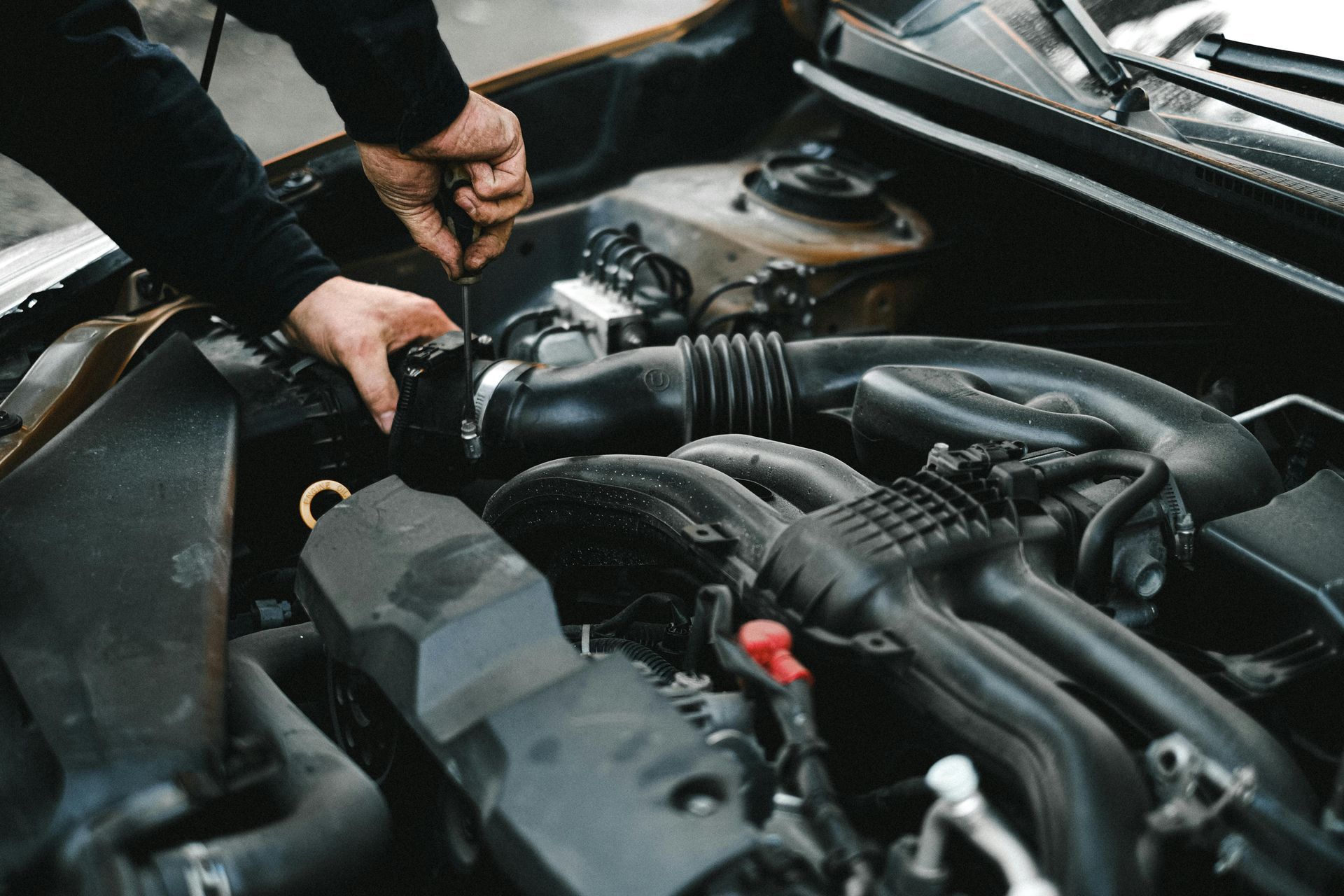
A knocking or rhythmic tapping sound coming from under the hood can mean several things, some minor and some serious.
In some cases, it may be low or dirty engine oil. Oil lubricates internal engine components, and when levels drop, parts can begin to make noise.
In more severe cases, engine knocking can signal internal wear or damage. Because engines are complex and expensive systems, any persistent knocking sound should be inspected quickly.
The longer internal engine problems go unaddressed, the more costly they become.
Squealing Under the Hood
A sharp squeal when starting your car or accelerating may be caused by a worn or loose serpentine belt.
This belt powers important systems like your alternator, power steering pump, and air conditioning compressor. If it slips or deteriorates, it can create a noticeable squealing sound.
Sometimes the fix is simple, such as adjusting belt tension or replacing a worn belt. However, if ignored, a failed belt can leave you stranded with a dead battery or overheated engine.
Don't Take Chances
Modern vehicles are designed to give warnings before major failures happen. Unusual noises are one of the most common and most ignored warning signs.
While not every sound means disaster, new, persistent, or worsening noises deserve attention. What starts as a minor repair can become a major expense if left unchecked.
If your vehicle has started making a sound that was not there before, it is worth having it inspected. The experienced technicians at Quick Align Automotive can diagnose the issue, explain what is happening, and recommend the right repair before a small problem turns into a costly one.
Listening to your car today can save you time, money, and frustration tomorrow.